Call to Action: Converse to change yourself.
Susan Bird would rather have a conversation than give a talk. Talking is trying to change someone else. Conversation is purposeful and co-creative. Focused conversations are goal-oriented and productive.
Showing posts with label reality. Show all posts
Showing posts with label reality. Show all posts
Tuesday, June 21, 2011

Sunday, June 12, 2011
Gever Tulley on Risk & Safety
Call to action: Expose kids to danger while teaching them simple safety guidelines.
5 Danagerous Things he suggests:
1. Play with fire
2. Use a pocketknife
3. Throw a spear
4. Break apart appliances
5. Break a stupid law
At the time of the talk, he was writing the book Fifty Dangerous Things (You Should Let Your Children Do). He has a cool companion site: http://www.fiftydangerousthings.com/
Stuart Brown on Importance of Play in Adult Life
Call to Action: Play!
Dr. Brown makes the case of lifelong playing. He says that play and neoteny are key to our survival as a species. I just want to note they key patterns of play also found in nifplay.org
Play Patterns
1. attunement
2. body & movement
3. object
4. social
5. imagination & pretend
6. storytelling-narrative
7. transformative-integrative & creative
He also has a book, Play: How It Shapes the Brain, Opens the Imagination, and Invigorates the Soul where he outlines 10 principles of play.
Play Principles:
1. Humor
2. Kinesthetics
3. Exploration
4. Competition
5. Leadership
6. Collecting
7. Art/Creation
8. Story Telling
9. Fantasy play
10. Choices.
Monday, May 30, 2011
Daniel Kahneman on the Perception of Happiness
Call to Action: Make all happy experiences memorable.
Kahneman presents cognitive difficulties when measuring happiness. He presents the difference between the experiencing self and the remembering self. He notes the following observations:
1. The ending of a story is more important than the significant events.
2. Experiences are created in the service of remembering.
3. Happiness is usually comparative.
4. Money can buy happiness only to a certain extent, but lack of money undeniably results in misery.
In my opinion, if you become aware of your experiences then the difference between the moment and the memory fades. If you live in the moment, the confusion of the past and future will no longer matter.
Thursday, May 26, 2011
Dan Buettner on Living Longer
Dr. Buettner presents results from a research on how to live the good life beyond a hundred years. He shows happy communities Sardinia Italy, Okinawa Japan and an Adventist group in California.
The main suggestions are as follows:
1. Integrate physical activities in your daily life.
2. Have weekly moments of peace.
3. Have a specific purpose for waking up in the morning.
4. Eat more plants.
5. Drink moderate amounts of wine.
6. Eat until you are not yet full. (80% is the recommended amount)
7. Live surrounded by loved ones.
8. Have around 6 lifelong friends in the same healthy & happy lifestyle.
9. Find some form of faith-based spirituality.
Personally, I think 8 & 9 blur together into one factor. But, that's just me.
http://www.bluezones.com/live-longer/power-9/
Sunday, May 22, 2011
Jonathan Zittrain on Trust & Kindness
Call to Action: Engage in Online Communities.
Zittrain frames the existence of the Internet and the success of open communities as a collective movement in trust and kindness. His wit and eloquence is matched by his incisive commentary on human behavior. One of the most worthwhile talks to watch.
Zittrain frames the existence of the Internet and the success of open communities as a collective movement in trust and kindness. His wit and eloquence is matched by his incisive commentary on human behavior. One of the most worthwhile talks to watch.
Saturday, May 21, 2011
William Li: Preventing Cancer with Food
Call to Action: Eat more soy products, parsley, red grapes, cooked tomatoes and berries.
Dr. Li presents the case of anti-angiogenesis therapy. By cutting off the blood supply to cancer cells, the body prevents cancer growth. He also asserts that eating anti-angiogenic food can help with obesity.
Dr. Li presents the case of anti-angiogenesis therapy. By cutting off the blood supply to cancer cells, the body prevents cancer growth. He also asserts that eating anti-angiogenic food can help with obesity.
Friday, May 20, 2011
Nina Jablonski on the Sun & your Skin
Call to Action: Get some UV B on your skin.
Jablonski explains that UV exposure differentiated our skin color or pigmentation. People with dark skin require a lot of sun exposure (UV-B) to keep our bones strong and maintain our regenerative capacity. People with light skin require a lot of sun protection from UV-A to prevent skin cancer, but they still need UV-B as well.
She enjoins everyone to celebrate our evolutionary history told by our skin.
Saturday, May 14, 2011
Barry Schwartz on Choice & Misery
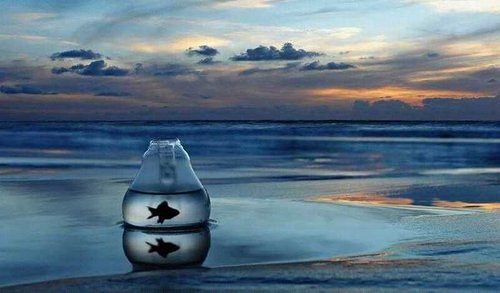
Call to action: Define your own fish bowl.

Choice is good but more choices is not better. The secret to happiness is low expectation.
Why Choice Makes People Miserable
1. Regret & anticipated regret
2. Opportunity costs
3. Escalation of expectations
4. Self-blame
Choice is good but more choices is not better. The secret to happiness is low expectation.
Why Choice Makes People Miserable
1. Regret & anticipated regret
2. Opportunity costs
3. Escalation of expectations
4. Self-blame
Saturday, May 7, 2011
Clay Shirky on Human Motivation
Call to action: Foster generosity in the systems you create.
Clay Shirky explains that humans are self-maximizing beings. We find the best way of optimizing available resources, tools and opportunity. He gives examples of social tools on both sides of the creative spectrum: LOLCats and Ushahidi.
The best part was when he summarized a research that proves that fear and punishment can change human behavior for the worse. The surprising bit is that the change extends through time even after the negative stimulus has been taken away.
Sunday, May 1, 2011
VS Ramachandran on Brain Powers
Call to action: Explore our humanity through science.
Ramachandran explains 3 things:
1. Visual recognition is linked with emotions. (Sure.)
2. Our brain learns from visual cues. (Fascinating with the phantom limb cure!)
3. We are all synesthetes. (I'd like to develop this power.)
I'm pretty sure his 2011 book, The Tell-Tale Brain: A Neuroscientist's Quest for What Makes Us Human will be as captivating.
Subscribe to:
Posts (Atom)